Latest report says Nanaimo rental rates continue climb
Published 12:30 pm Tuesday, March 10, 2026
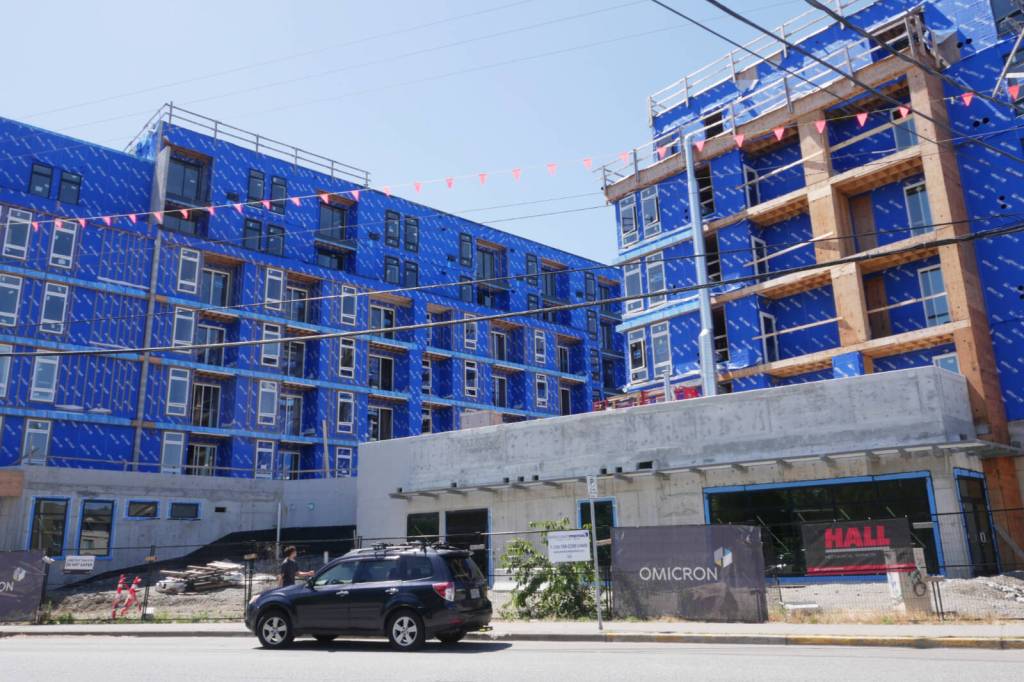
B.C. continues to lead Canada in falling rental rates, but Nanaimo may not yet be following the trend.
According to a report released by Rental.ca Monday, March 9, average rents for all rental unit types are continuing to fall across most provinces, but B.C. is leading the country with a drop of 4.9 per cent to an average monthly rental rate of $2,375 across the province, followed by Ontario at 4.7 per cent; Alberta at 4.6 per cent; and Quebec at 3.1 per cent compared to 2025.
The new statistics mark a steady 17-month decline with the average asking rent across Canada in February standing at $2,030, down 2.8 per cent year-over-year to a 33-month low, according to the report.
But the report also noted rents rose month-over-month in the key markets of Vancouver, Ottawa, Calgary, Edmonton and Montreal. In Nanaimo, despite slight month-to-month rent decreases, rent costs are still up 7.2 per cent year over year compared to 2025 and now stand at an average $1,812 for a one-bedroom apartment and $2,324 for a two-bedroom.
Those figures for rising rent costs tell a similar story to those reported in the City of Nanaimo’s 2025 State the Economy Report – which provides the most recent figures published by the city until the 2026 State of the Economy Report is published this spring – that posted a rent hike of 7 per cent from 2023 to ‘24 for three-plus bedroom units, and 6.7 per cent for single-bedroom units. Bachelor apartments took the biggest hit at 9.9 per cent. Average monthly rental costs stood, consecutively, at $1,858, $1,408 and $1,246.
The overall average monthly rental cost for one-, two- and three-plus bedroom units combined stood at $1,558 in the city’s report on Nanaimo’s 2024 rental market overview, which was a 6.3 per cent rise over 2023. Rental.ca’s most recent report from March 9, however, pegs the current average monthly rental cost (for one- and two-bedroom combined average) in Nanaimo at $2,057.
The city noted in its 2025 State of the Economy Report that rental supply was expanding with overall vacancy rate rising to 2.9 per cent, but affordability remained a key challenge.
It’s possible the trend of tumbling rental costs and rising vacancy rates will eventually spill over into the Nanaimo market. In February, purpose-built apartment and condo asking rents in B.C. were down 11.8 per cent from their peak, seen in September 2023, according to a press release from the province.
“This latest rent report continues to show encouraging signs for renters, with declining prices helping ease everyday costs for people in British Columbia,” said Christine Boyle, Minister of Housing and Municipal Affairs, in the release
“This reflects years of work, policies and partnerships across all levels of government.”
Despite recent rental cost increases in Vancouver in 2026, one-bedroom apartment rental asking prices have fallen by 5.7 per cent compared to this time last year. Overall apartment rents in Vancouver fell 7.2 per cent year over year, the biggest decrease among Canada’s six largest markets, according to the Rentals.ca report, with the largest overall decrease in apartment rents seen in New Westminster at 12.8 per cent. North Vancouver remains Canada’s most expensive rental market with average asking rent at $2,926.
“Our work is making a difference – cutting red tape, speeding up approvals, cracking down on speculators and connecting with important partners to get more affordable homes built faster,” Boyle said. “This work is key to why B.C. is leading the way in rental declines and how we achieved record-level completions of purpose-built rentals in 2025, with 21,000 completed for a 56 per cent increase over 2024.”
In that same year, B.C. also recorded about 25,900 home registrations – a 39.6 per cent increase from 2024 – showing strong interest from developers in continuing to build, she said.
To fix barriers that slow down new housing and infrastructure, the province had developed an online platform through the Digitally Accelerated Standardized Housing (DASH) program to help developers design and build three-to-six-storey buildings faster and tamp down rising new home prices and the province also partnered with the federal government through Build Canada Homes to secure $170 million in capital funding for B.C. With an additional $200-million funding commitment from the province, it’s expected to help advance more than 700 supportive and transitional homes.
“While I’m encouraged by the progress so far, there is still a lot of work ahead to help people in British Columbia find a home they can afford,” Boyle said. “We will not stop until people throughout B.C. can find homes that meet their needs, in the communities they love.”